good
Skip to main content
Fu Jing was a Shang dynasty queen of Wu Ding and recipient of the Houmuwu sacrificial vessel.[1]
https://en.wikipedia.org/wiki/Tawerettenru

Eritha (Linear B: E-ri-ta, 13th–12th century BC) was a Mycenaean Greek priestess
born 1250 bc
dead 1180 bc
 ikan
ikan
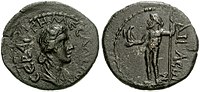
Valeria Messalina[1] (Latin pronunciation: [waˈlɛrɪ.a mɛssaːˈliːna]; c. 17/20–48)

(ca. 2500-2330 BC)


https://en.wikipedia.org/wiki/Neferthenut


 1878 BC to 1839 BC)


gambar hancur patung gambar orang baik???
 Itaweret (Ita-the elder) was an Ancient Egyptian king's daughter who lived in the 12th Dynasty around 1850 BC.

 Vologases II was a Parthian prince who competed against his brother Pacorus II (r. 78–110) for the Parthian crown from 78, until his defeat in 80.[1][2]
again in 107 as the colleague of Lucius Licinius Sura, who was himself consul for the third time. babi buddha homo patkay

 Artemisia I of Caria (Ancient Greek: Ἀρτεμισία; fl. 480 BC)
Winged female figure in kneeling-running stance, holding kerykeion and victory wreath, on the coinage of Caria around the time of Artemisia.


https://en.wikipedia.org/wiki/Category:12th-century_BC_Egyptian_women
https://en.wikipedia.org/wiki/Category:12th-century_BCE_Hebrew_people
https://en.wikipedia.org/wiki/Category:12th-century_BC_Chinese_people
https://en.wikipedia.org/wiki/Category:10th-century_BC_Greek_people
https://en.wikipedia.org/wiki/Category:7th-century_BC_Japanese_people
https://en.wikipedia.org/wiki/Category:4th-century_BC_women_writers is crazy ??
Tiaa (wife of Seti II)
| Tiye | |||||
|---|---|---|---|---|---|
| Queen consort of Egypt | |||||

A Queen from the time of Ramesses III
| |||||
| Spouse | Pharaoh Ramesses III | ||||
| Issue | Pentawer | ||||
| |||||
| Dynasty | 20th Dynasty of Egypt | ||||
| Religion | Ancient Egyptian religion | ||||
Fu Jing was a Shang dynasty queen of Wu Ding and recipient of the Houmuwu sacrificial vessel.[1]
https://en.wikipedia.org/wiki/Tawerettenru

Eritha (Linear B: E-ri-ta, 13th–12th century BC) was a Mycenaean Greek priestess
born 1250 bc
dead 1180 bc
Fresco depicting a goddess or priestess in Mycenae, 1250–1180 BC.
Jael or Yael
| |
|---|---|

Jacopo Amigoni, Jael and Sisera, 1739
| |
| Nationality | Kenite |
| Other names | Ya'el |
| Spouse(s) | Heber the Kenite |
ikanValeria Messalina[1] (Latin pronunciation: [waˈlɛrɪ.a mɛssaːˈliːna]; c. 17/20–48)

| Queen Kubaba | |
|---|---|
| Queen of Sumer | |

Kubaba holding a poppy capsule (possibly a pomegranate) and a tympanum (or perhaps a mirror)
Museum of Anatolian Civilizations, Ankara, Turkey | |
| Successor | Puzur-Suen |
| Issue | Puzur-Suen |
| House | 3rd Dynasty of Kish |
Tisethor
Rebecca
Hagar
| |
|---|---|

Expulsion of Ishmael and His Mother, by Gustave Doré
| |
| Born | |
| Died | |
| Other names | Hājar |
| Occupation | Servant |
| Spouse(s) | Abraham |
| Children | Ishmael (son of Abraham) |
| Relatives | Nebaioth, Mibsam, Dumah, Jetur, Naphish, Mishma, Basemath, Hadad, Tema, Massa, Adbeel, Kedemah, Kedar (all grandchildren) |

Statue of Nofret I

Neferuptah, from Medinet Madi

list queen
Menet was an Ancient Egyptian king's daughter living in the Twelfth Dynasty most likely under the kings Senusret III and Amenemhat III. Menet had the titles king's daughter and the one united with the white crown (Khenemetneferhedjet).
She is only known from her sarcophagus and burial in a gallery tomb
buried with other members of the royal family next to the pyramid of Senusret III at Dahshur.[1] From the position of the tomb it seems likely that she was the daughter of the latter king.
https://en.wikipedia.org/wiki/Meretseger_(queen) orang baik sekali ??
.jpg) 1878 BC to 1839 BC)
1878 BC to 1839 BC)
Pectoral from the jewellery box of Mereret
Holy MatriarchRachel | |
|---|---|
| Born | Paddan Aram |
| Died | Canaan |
| Venerated in | Judaism Christianity Islam |
| Major shrine | Rachel's Tomb |
| Feast | Roman Catholicism: 1 November[1] Orthodox Church: Sunday before Christmas |
| Sobekneferu | |
|---|---|
| Neferusobek Skemiophris (in Manetho) | |
.jpg)
Head of ruling pharaoh Sobekneferu
|
 Itaweret (Ita-the elder) was an Ancient Egyptian king's daughter who lived in the 12th Dynasty around 1850 BC.
Broad collar of Itaweret, found on her body
Ita was an Ancient Egyptian king's daughter who lived in the 12th Dynasty around 1850 BC. She is known from the statue of a sphinx found in Qatna in modern Syria. The statue is today in the Louvre (AO 14075)
Hathorhotep was an ancient Egyptian king's daughter at the end of the Twelfth Dynasty during the Middle Kingdom. Hathorhotep ("Hathor is satisfied") is only known from the fragment of a canopic vase found in pyramid of king Amenemhat III (who ruled about 1860 BCE to c.1814 BCE
Khenemetneferhedjet III was an Egyptian queen. She was the wife of the Twelfth Dynasty ruler Amenemhet III and was buried in his pyramid at Dahshur. Her name is so far only known from one object, an alabaster vessel found in her burial. She had the titles king's wife, member of the elite and mistress of the two countries. She was buried in a decorated, but uninscribed sarcophagus
Khuwyt (c. 1960 B.C.)
Sebat was an Ancient Egyptian king's daughter of the Twelfth Dynasty. Her only known title is king's daughter of his body. She is so far only attested on the back slab of a statue base found at Serabit el-Khadim on Sinai. The statues are now lost but once depicted a falcon, king Amenemhat I and king Senusret I. The inscription mentions at the top Amenemhat II and in a lower register Senusret I, the king's daughter Sebat, the king's wife Neferu, Amenemhat I and again Senusret I.[1] From this evidence it seems clear that Sebat was the daughter of Senusret I and Neferu and the sister of Amenemhat II.[2]
Zatipy (daughter of Ipy) was an important Ancient Egyptian woman who lived around 2000 BC

Banishment of Hagar, Etching. À Paris chez Fr. Fanet, Éditeur,
Rue des Saints Pères n° 10. 18th century. Sarah is seen at the left,
looking on. sarah
Popular posts from this blog
S 2006
https://en.wikipedia.org/wiki/Noor_Hassanali
https://en.wikipedia.org/wiki/Said_Mohamed_Djohar
https://en.wikipedia.org/wiki/Rajkumar_(actor)
https://en.wikipedia.org/wiki/Silvia_Caos
https://en.wikipedia.org/wiki/Noor_Hassanali
https://en.wikipedia.org/wiki/Han_Ahmedow
2007
https://en.wikipedia.org/wiki/Bruno_Mattei
https://en.wikipedia.org/wiki/Bob_Clark
https://en.wikipedia.org/wiki/Pascal_Yoadimnadji
https://en.wikipedia.org/wiki/Iwao_Takamoto
https://en.wikipedia.org/wiki/Klausj%C3%BCrgen_Wussow
https://en.wikipedia.org/wiki/Liane_Bahler
https://en.wikipedia.org/wiki/Tony_Ryan
https://en.wikipedia.org/wiki/John_Compton
https://en.wikipedia.org/wiki/Ryan_Shay
Ana Carolina Reston Brazilian model Description Ana Carolina Reston Macan was a Brazilian model. Wikipedia Born: June 4, 1985, Jundiaí, State of São Paulo, Brazil Died: November 14, 2006, São Paulo, State of São Paulo, Brazil
https://en.wikipedia.org/wiki/Said_Mohamed_Djohar
https://en.wikipedia.org/wiki/Rajkumar_(actor)
https://en.wikipedia.org/wiki/Silvia_Caos
https://en.wikipedia.org/wiki/Noor_Hassanali
https://en.wikipedia.org/wiki/Han_Ahmedow
2007
https://en.wikipedia.org/wiki/Bruno_Mattei
https://en.wikipedia.org/wiki/Bob_Clark
https://en.wikipedia.org/wiki/Pascal_Yoadimnadji
https://en.wikipedia.org/wiki/Iwao_Takamoto
https://en.wikipedia.org/wiki/Klausj%C3%BCrgen_Wussow
https://en.wikipedia.org/wiki/Liane_Bahler
https://en.wikipedia.org/wiki/Tony_Ryan
https://en.wikipedia.org/wiki/John_Compton
https://en.wikipedia.org/wiki/Ryan_Shay
Ana Carolina Reston Brazilian model Description Ana Carolina Reston Macan was a Brazilian model. Wikipedia Born: June 4, 1985, Jundiaí, State of São Paulo, Brazil Died: November 14, 2006, São Paulo, State of São Paulo, Brazil
| Artemisia II | |
|---|---|

Original and reconstitution of the statue traditionally identified as Artemisia, from the Mausoleum at Halicarnassus, now in the British Museum.
| |
| Satrap of Caria | |
| Reign | 353–351 BCE |
| Predecessor | Mausolus |
| Successor | Idrieus |
| Consort | Mausolus |
| House | Hecatomnids |
| Father | Hecatomnus |
 Vologases II was a Parthian prince who competed against his brother Pacorus II (r. 78–110) for the Parthian crown from 78, until his defeat in 80.[1][2]
again in 107 as the colleague of Lucius Licinius Sura, who was himself consul for the third time.
babi buddha homo patkay Artemisia I of Caria (Ancient Greek: Ἀρτεμισία; fl. 480 BC)
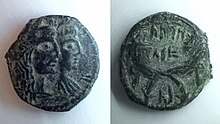
Nabataean Kingdom, Aretas IV and Shaqilat, 9 b. C. - 40 a. D., AE18. Obverse: Jugate busts of Aretas IV ad Shaqilat; reverse: Crossed cornucopia; name of Aretas IV and Shaqilath in Nabataean script. Grading VF[1][2]
Triteuta (Ancient Greek: Τριτεύτα; fl. 230–219 BC)
| Amanimalel | ||||||||||||||||||
|---|---|---|---|---|---|---|---|---|---|---|---|---|---|---|---|---|---|---|
| Queen consort of Nubia | ||||||||||||||||||

Granite statue of Amanimalel from Jebel Barkal, now in the National Museum of Sudan
| ||||||||||||||||||
| Burial |
uncertain, perhaps pyramid 22 at Nuri
| |||||||||||||||||
| Spouse | uncertain, possibly Senkamanisken | |||||||||||||||||
| Issue | uncertain, possibly queens Asata and Madekan | |||||||||||||||||
| ||||||||||||||||||
| Dynasty | Kingdom of Kush | |||||||||||||||||
| Father | uncertain, Atlanersa | |||||||||||||||||


ainul mardhiah
Cordelia of Britain
| Goneril | |
|---|---|
| King Lear character | |

Goneril and Regan by Edwin Austin Abbey
| |
| Created by | William Shakespeare |
Amastris
| |
|---|---|

Didrachm of Amastris. Amastris was the first woman to issue coins in her own name. British Museum.
| |
| Born | |
| Died | c. 284 BC |
| Spouse(s) | Craterus Dionysius Lysimachus |
| Children | Clearchus II and Oxyathres |
| Parent(s) |
|
Saint Paul the Apostle
| |
|---|---|

Saint Paul, by Bartolomeo Montagna
| |
| Apostle to the Gentiles Martyr | |
| Born | c. 5 AD[1] Tarsus, Cilicia, Roman Empire[2] |
| Died | c. 64 or c. 67 AD (aged 61–62 or 64–65)[3][4][5][6] Rome, Roman Empire[3][4] |
| Venerated in | All Christian denominations that venerate saints |
| Canonized | Pre-Congregation |
| Feast |
|
| Attributes | Christian martyrdom, sword, book |
| Patronage | Missionaries, theologians, evangelists, and Gentile Christians |
Saint Quirinus of Neuss
| |
|---|---|

Saint Quirinus and Saint Balbina
| |
| Died | 30 March 116 Rome, Italy |
| Venerated in | Roman Catholic Church, Eastern Orthodox Church |
| Major shrine | Neuss |
| Feast | April 30; March 30[1] |
| Attributes | military attire; knight with lance, sword, hawk; banner or sign with nine balls[2] |
| Patronage | Neuss; Correggio, Italy; invoked against the bubonic plague, smallpox, and gout; afflictions associated with the legs, feet, ears; paralysis; ulcers; Goiter; skin conditions; diseases affecting cattle and horses;[1] patron saint of animals;[3] patron saint of knights, soldiers, and horsemen[4] |
| Pacorus II huruf a | |
|---|---|
| King of Kings | |
,_Seleucia_mint.jpg) | |
| King of the Parthian Empire | |
| Reign | 78 – 110 |
| Predecessor | Vologases I (predecessor) Vologases II (rival king) Artabanus III (rival king) |
| Successor | Vologases III (successor) Osroes I (rival king) |
| Born | c. 61/2 |
| Died | 110 (aged 48 or 49) |
| Issue | Vologases III Axidares Parthamasiris Meredates |
| House | Arsacid dynasty |
| Father | Vologases I |
| Religion | Zoroastrianism |
Saint Veronica
| |
|---|---|

Saint Veronica, by Hans Memling, c. 1470.
| |
| Born | 1st century AD Caesarea Philippi or Jerusalem, Judea |
| Venerated in | |
| Canonized | Pre-Congregation |
| Feast | July 12[1] |
| Attributes | Cloth that bears the image of Christ's face |
| Patronage | images; laundry workers, pictures, photos, photographers,;[2] Santa Veronica, San Pablo City, Laguna |
Thaddeus of Edessa
Saint Addai ܡܪܝ ܐܕܝ api | |
|---|---|
 | |
| Born | c. 1st century AD |
| Died | c. 2nd century AD |
| Venerated in | Assyrian Church of the East Roman Catholic Church Chaldean Catholic Church Syro-Malabar Catholic Church Syriac Orthodox Church Eastern Orthodox Church Oriental Orthodox Church Church of Caucasian Albania |
| Feast | August 5 |
Saint Thecla
| |
|---|---|
 | |
| Virgin and Martyr | |
| Born | 30 AD Iconium, modern-day Konya, Turkey |
| Died | 1st century AD |
| Venerated in | Oriental Orthodoxy Roman Catholic Church Eastern Orthodox Churches The Episcopal Church |
| Feast | September 23 (Roman Catholic Church, The Episcopal Church) September 24 (Eastern Orthodox Churches) Thout 23 (Coptic Christianity)[1] |
| Sanatruk | |
|---|---|

Sanatruk and Avde after three days in snow storm
| |
| King of Armenia | |
| Reign | 88–110 AD |
| Predecessor | Tiridates I |
| Successor | Axidares |
| House | Arsacid |
Comments